| Bookmark Name | Actions |
|---|
DLM Implementation Methods
This section provides a brief overview about the two methods in which Data Life Cycle Management (DLM) can be implemented.
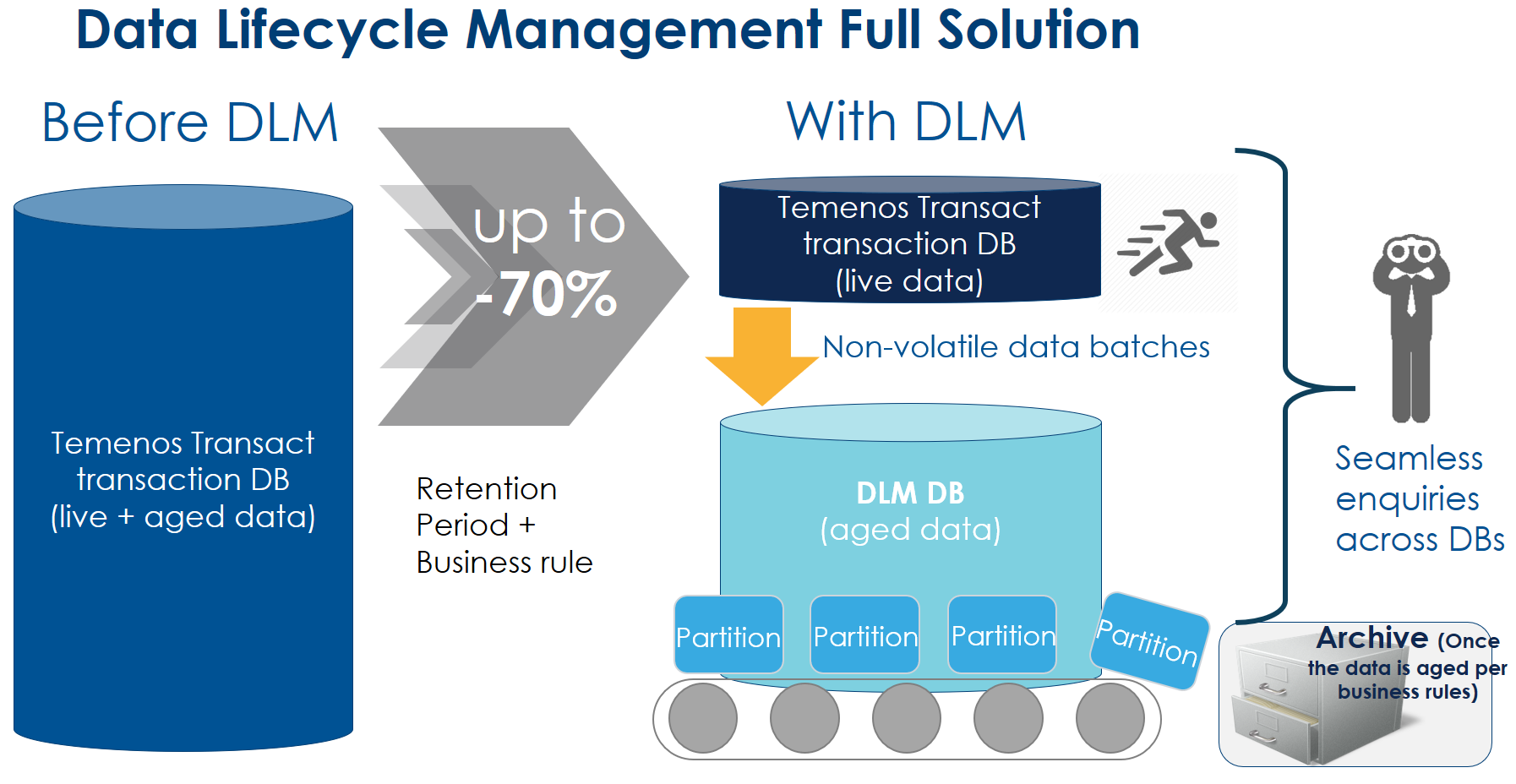
Full DLM with XPS Productised Services
Aged or non-volatile data is moved from the Core Banking live database to the DLM database using a data transfer process that can be configured by the bank. This process is called data separation.
As part of the full separation process, the aged data is copied from the Core Banking LIVE database to NVDB. The system compares the copied data with the original data for consistency. Finally, the original data is purged from the Core Banking LIVE database. The bank now wishes to reclaim the space, which is freed up after this deletion.
DLM Trickle Feed
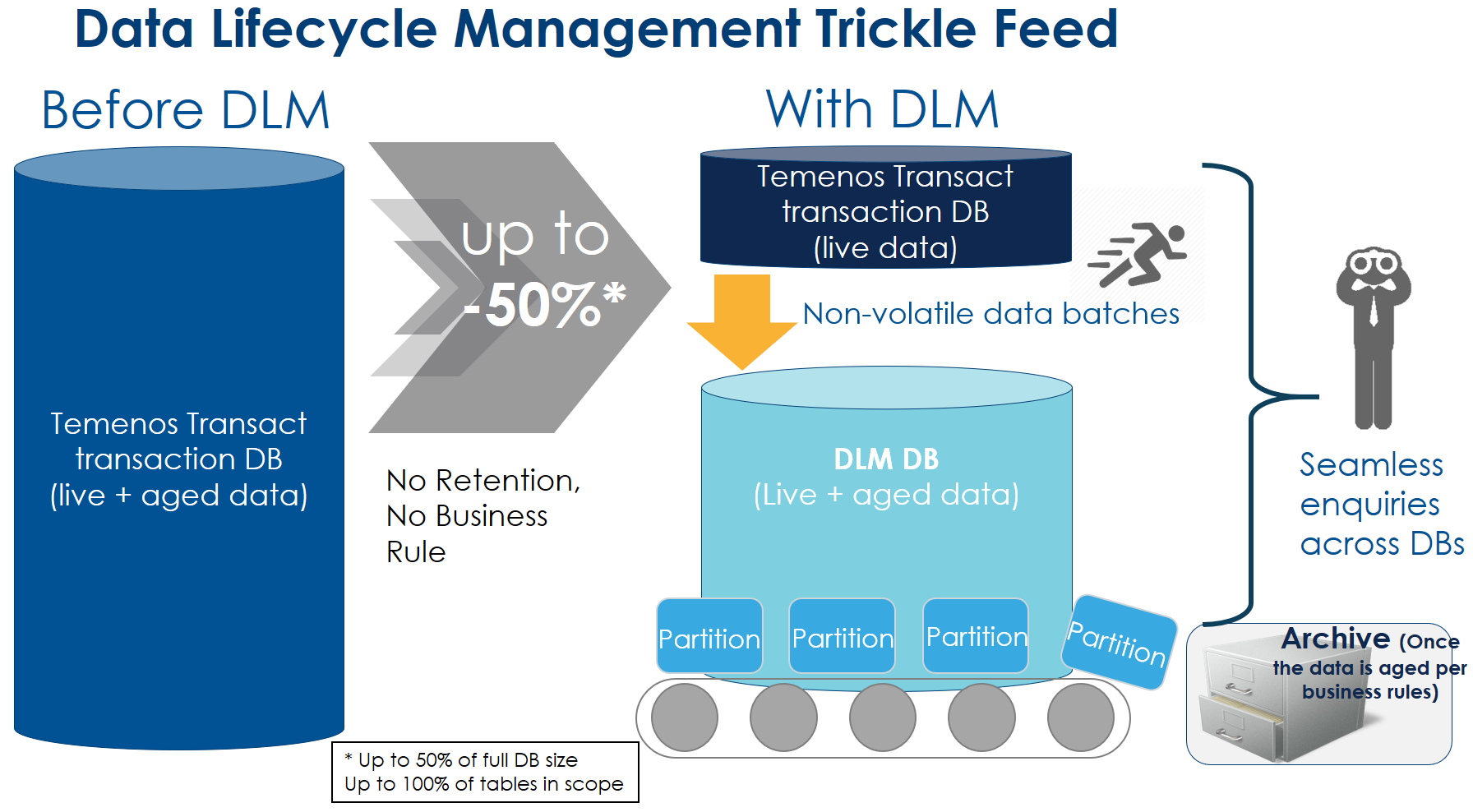
Trickle Feed solution is a technical separation of data from the LIVE database system to a second database called DLM database to reduce the size of the LIVE database and gain improvements in memory performance due to the smaller data size. With this approach, the bank gets to select the top tables from a list of defined core tables, which they want to move across to the DLM database. There is no option to select a retention period in the LIVE database and all data is moved. With the DLM Trickle Feed approach, the data moved to the DLM database is a combination of aged and LIVE data (where data is unlikely to be changed but may still be accessed by Temenos Transact processes such as statement generation).
Add Bookmark
save your best linksView Bookmarks
Visit your best links BACK
BACK


Are you sure you want to log-off?